What It Takes to Create Magnetic Spaces

The pull to create magnetic spaces for ideas to collide and people to meet isn't going anywhere. This is how we're thinking about physical spaces at Blackbird.
August 6, 2026
Sofia Echesortu

I've spent a lot of my life feeling torn between two worlds. Argentina and Australia. Community and individualism. Planning and spontaneity. Curation and serendipity. Slowing down and moving at growth-stage speed. The outdoor world and the tech world. For a long time I treated that as a fault line running straight through me, something I'd eventually have to resolve one way or the other.

Lately I've started to think it's the opposite. Being able to exist deeply in more than one world at once might be the closest thing I have to a secret weapon.

As an Argentinian who doesn't live in Argentina, I feel a kind of responsibility to keep representing that side of the culture wherever I go (specially during World Cup times iykyk). Funnily enough, when I'm actually in Argentina, I do the reverse, trying to embody as much of the Australian in me as I can. Wherever I stand, I seem to be pulling for whichever side of me isn't in the room.

What’s the biggest difference between growing up in Argentina versus living in Australia now?

I used to scrabble around for the answer. Lately I've landed on something truer: in Argentina, you are rarely alone, whether you want to be or not. Your house is my house. Someone's cousin's mum will feed you before she learns your name. Extended family isn't a special occasion, it's Tuesday. The street outside isn't something you pass through, it's something you occupy, at midnight, in plastic chairs, with a radio playing something everyone somehow knows the words to.

Because of this, I keep coming back to this question. Could Latin America hold something like an antidote to loneliness? Not because everything there is better, plenty isn't, but because belonging gets built into daily life as a survival strategy, not added on as a nice-to-have. Flexibility over formality. Eating together, often. Taking over the streets instead of retreating indoors. It's a different operating system for how people are meant to find each other.

But one thing holds steady no matter which side I'm on. Belonging, human connection and feeling seen remain a core part of the human experience. Humans keep gathering in community and building rituals, trying to leave something better behind for whoever comes next.

This hypothesis has become my latest mission, what I care about, why I do what I do. Not just at work, but in how I spend my time generally: what I listen to, what I write about, where I go, how I connect with people.
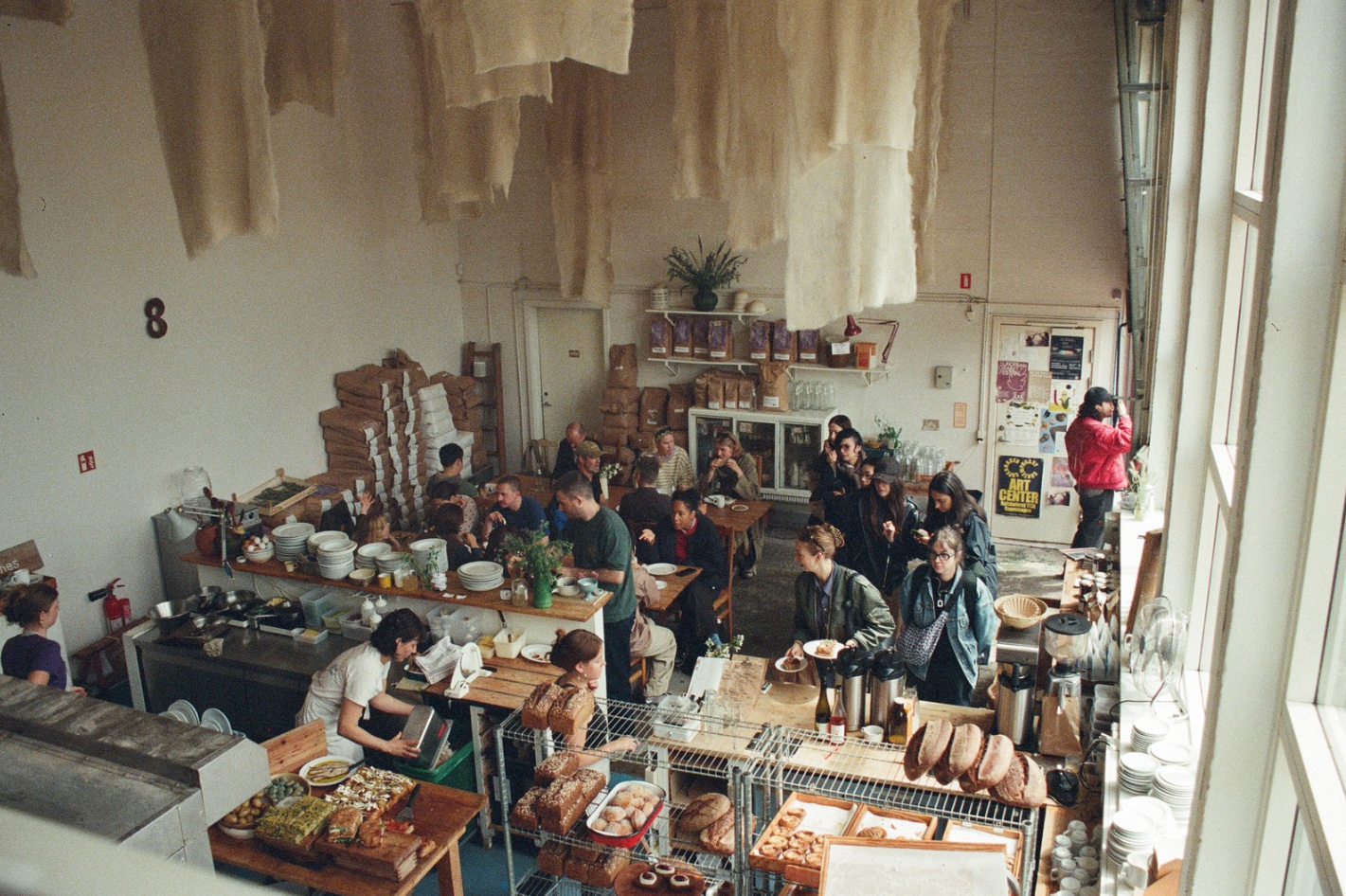
Lille Bakery, Copenhagen
by
Sofia Echesortu

What I'm Sitting With

Here's the question I can't put down: does belonging that happens in a room actually travel with someone once they leave it? A great night creates a feeling. Feelings fade by Tuesday unless something in the design helps them stick.

A few others are running alongside it:

01. How does ambition spread across an entire ecosystem, not just within a single event?

02. How do we design experiences that turn belonging from a feeling in the room into something people actually carry forward and act on?

03. What role do physical spaces and cultural infrastructure play in building the conditions for community? What can a city that's invested in this for decades teach us?

I've started thinking of the spaces that matter as way stations, not destinations (thanks Joel Connolly). People arrive mid-journey, pulled in by some early signal that there might be something for them inside. They give something and they take something. If the space has done its job, they leave a little different, carrying a new question instead of the one they walked in with.

For that to happen, a space has to hold two things in tension: enough of the known to create trust, enough of the unknown to spark curiosity. Too much of either and nothing shifts, or no one feels safe enough to. Too little and you’ve wasted everyone’s time.

I don't have this tension fully worked out. I'm not sure anyone does. But you know when a space is balancing it. You feel it.

Like going into a new bakery, you know it’s a bakery, you know what you usually find in a bakery, loaf of bread, coffee, croissants, you walk in it’s smells like a bakery, it looks like a bakery, but when you go to order they don’t just have croissants, they have a freshly baked Rhubarb tart. And you order it. And it’s delicious, so you keep coming back the next day, for what they will bake next, oh and you tell all your friends about it. 

I've started thinking of the spaces that matter as way stations, not destinations. For that to happen, a space has to hold two things in tension: trust and curiosity.

One Week in Copenhagen

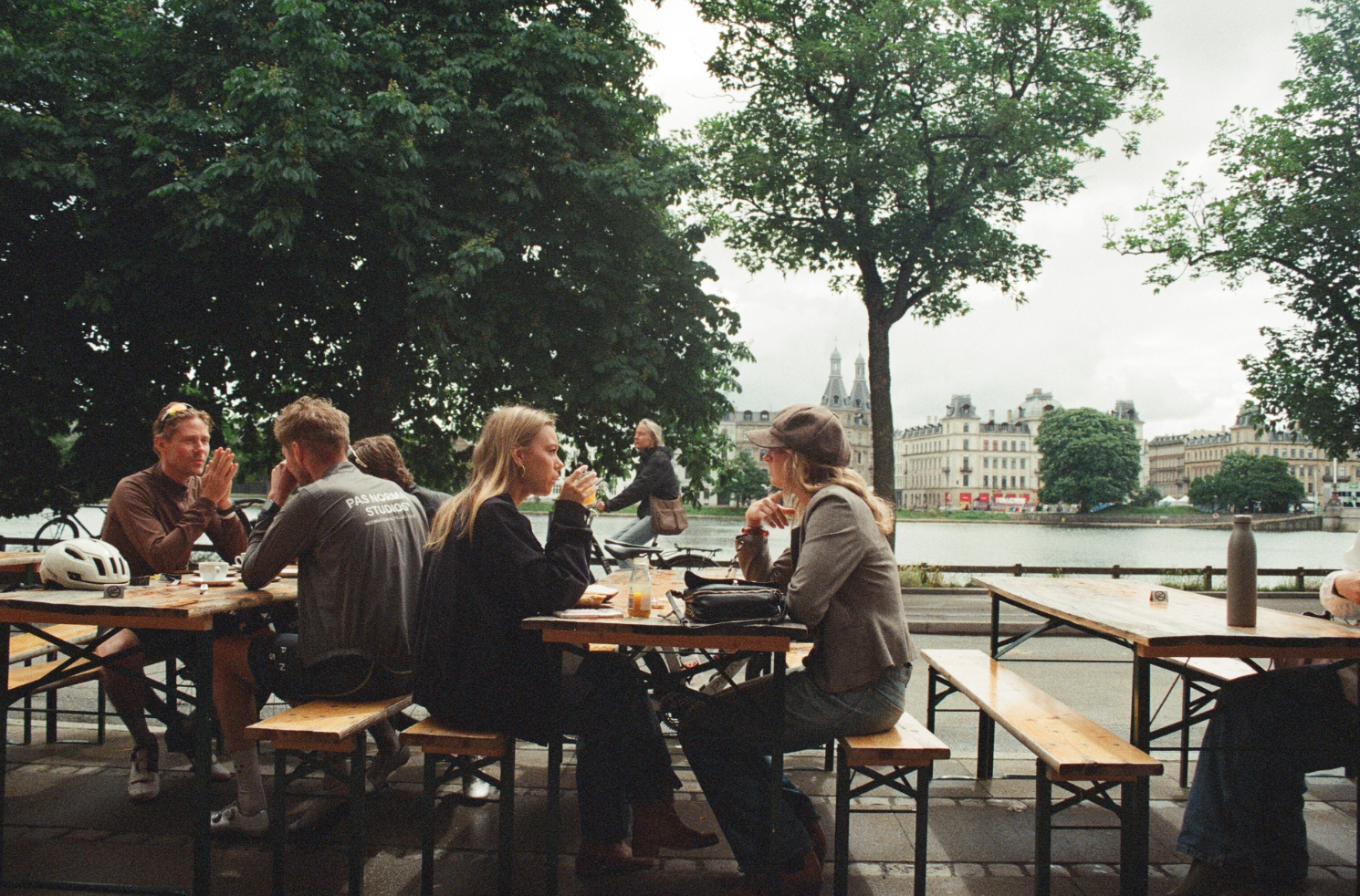
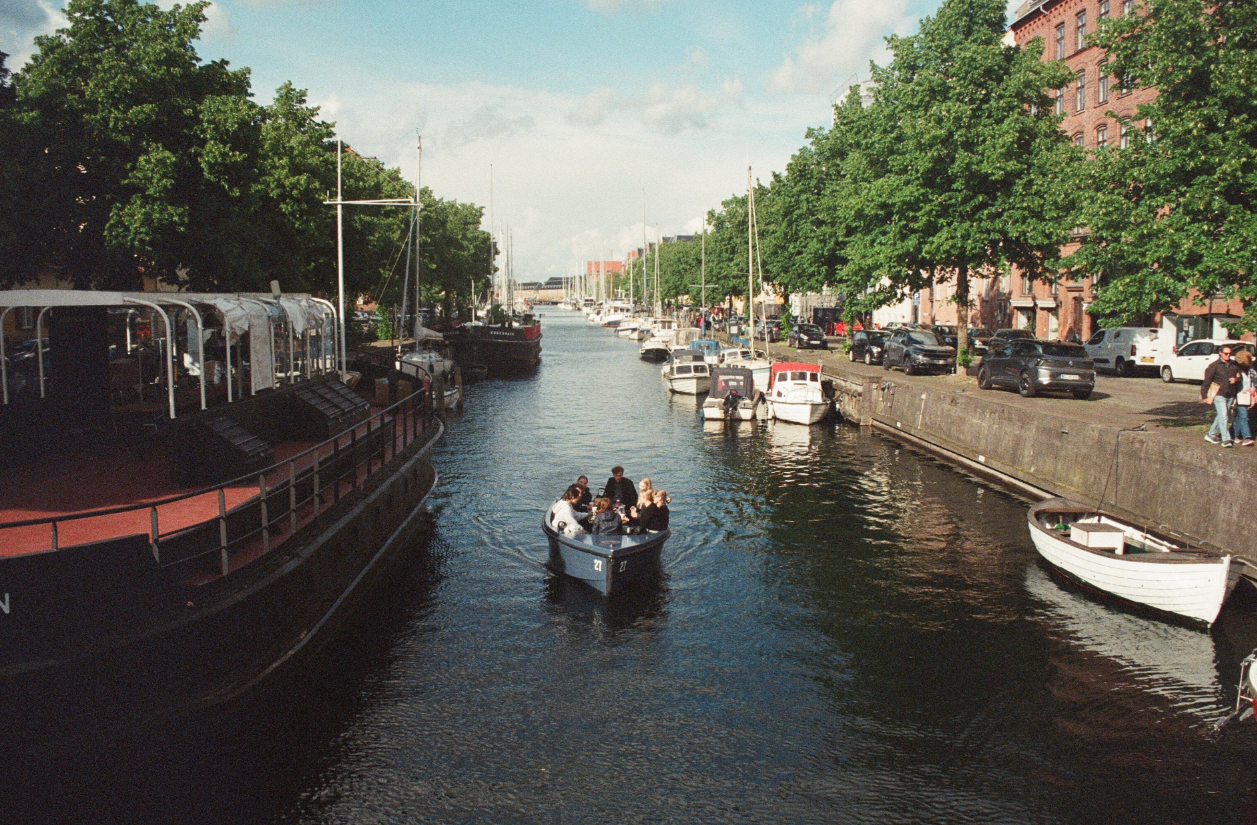
Between mid-May and the end of June I was part of a six-week Kaospilot x Future Days facilitation course, split between online sessions and one in-person week in Copenhagen. Fortunately, that week overlapped with Future Days, an annual festival for people working at the edges of culture, design and systemic change, and 3 Days of Design, a city-wide design showcase. I went into the week carrying the three questions above and to my surprise, Copenhagen as a city answered more than I expected.

During this week, three observations stood out. One of spreading ambition, one on turning belonging into something you can carry forward and the other on the architecture a city can provide.

On ambition spreading across an ecosystem: not through a single room. It compounds through infrastructure, time and proof. Copenhagen's clearest case study is a forty-year harbour clean-up, an unglamorous, expensive project that slowly changed what an entire city believed was possible. Nobody swims in a harbour because of a good speech. They swim in it because someone spent decades making it swimmable. 3 Days of Design showed a faster version at city scale, cafes and private homes opening their doors as participants, not venues rented for the week. One statistic from a session that week has stuck with me since, that only around 15% of people actually apply what they learn from a single training, and most of the rest try and give up. Ambition doesn't spread just because a room feels electric. It spreads when there's something preparing people beforehand and something catching them afterwards.

On turning belonging into something people carry forward: The experience doesn't start when people walk through the door, the anticipation beforehand is already part of the design. Future Days opened by sending everyone into the city before a single talk happened, small groups led by local guides, asked to read their neighbourhood for what's ending, enduring and emerging, then bring it back into the room. It gave the group shared reference points before anyone had shared an idea. Each day closed with a facilitated group debrief, a ritual for putting down what you'd accumulated instead of carrying it home to lose overnight. A navigator (rather than an MC) held a single thematic thread across all three days, instead of just introducing the next speaker.

On physical spaces and cultural infrastructure, and what a city with decades of investment can teach us, four places did most of the work.

  • Absalon is a deconsecrated church in Vesterbro. The furniture is entirely secondhand. Older locals play cards near where the altar used to be while twenty-somethings work on laptops two tables over, there's a yoga studio upstairs, and communal dinners run most nights, long tables, strangers, a light program just enough to keep people coming back. Someone told me a church used to be the old social media, the place you went to stay loosely connected to everyone around you. Absalon didn't reinvent that idea. It just changed the operating system. 
  • Louisiana Museum is an hour north of the city by train, right on the water, and one of the best museums I've been to. It reminded me instantly of MONA, that same feeling of a place built with a genuine point of view, where the landscape is inseparable from the art. The real lesson was in the sequencing. Louisiana is not convenient. You have to want to go. And the fact that it's an hour away, made easy by a good train, is part of the design. Build something genuinely worth the trip and the time first. Then build the infrastructure that makes the trip possible. 
  • Cycling turned out to be the city's real belonging infrastructure, more than any building. What that unlocks isn't just convenience, it's cross-pollination, moving across neighbourhoods and attending multiple things in a single day in a way that wouldn't have been possible otherwise. Locals said the same thing: cycling doesn't just get you there faster, it makes you more likely to stumble across something and stay longer. It expands your relationship with a city.
  • Communal dining emerged here as a direct response to a tension most successful cities eventually hit, from the outside doing everything right, from the inside becoming unaffordable, with winters that get genuinely lonely. Long tables, strangers, a shared meal, pooled resources. Civic infrastructure built from necessity, dressed up as hospitality, and nobody designed it top-down.

None of this is really about Denmark. It's about what happens when a place decides, over decades, that belonging is worth designing for on purpose.

What I do know is that the pull toward belonging isn't going anywhere. If anything, the more digital and atomised life gets, the harder people seem to be reaching for a room, a table, a street, a church with the pews ripped out, anything that gives them permission to be seen without having to explain themselves first.

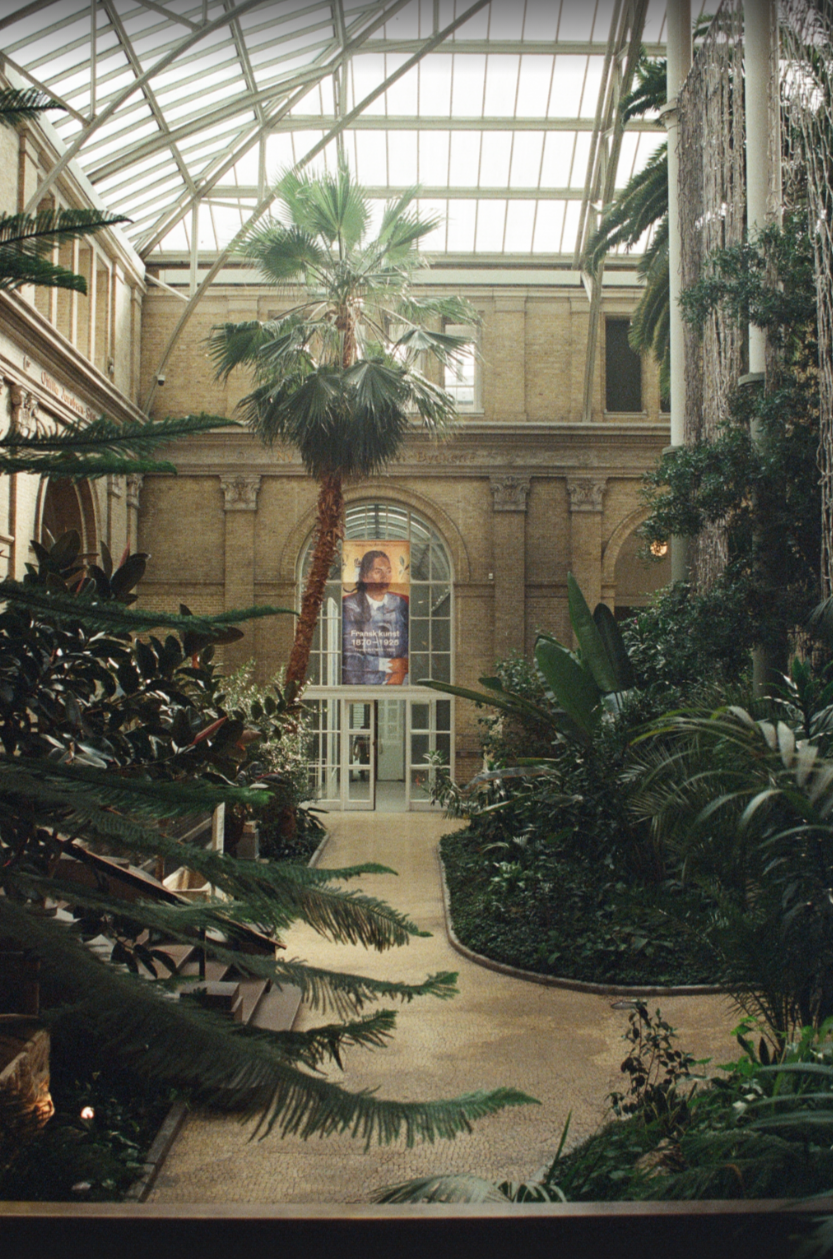
The Glyptotek, Copenhagen
by
Sofia Echesortu

Bringing It Home

Some of this is already showing up in how we build at Blackbird, not as theory, as decisions.

We've been leaning harder into personal connection over polish. Handwritten welcome notes instead of printed signage. Hand-drawn wayfinding over anything that looks corporate. Small details collected about people, a founder's film photography habit, someone's dog's name, that turn a generic touchpoint into one that says we were actually paying attention.

We're borrowing Future Days' instinct for pacing too. A hard close that sends people back out into the world energised instead of depleted. A structured way to open a gathering by grounding people in the place itself before anyone starts talking to them. A closing ritual at the end of each day that gives people somewhere to put what they've accumulated, instead of just sending them home to lose it overnight.

And underneath all of it, the same principles I grew up with, minus the necessity that originally forced them. My house, your house. Extended, cross-stage relationships instead of one-off transactions. Flexibility over formality, people should be able to come late, leave early, opt in and out, without belonging feeling conditional on perfect attendance.

How I'll Keep Exploring

I'm staying in the Future Days community as it grows into its next chapter, a fellowship, a research lab, a masters course, because watching a young initiative figure out its own belonging problem in real time is its own education.

On my desk consistently: DO Curate by Claire Hieatt. Listening to a podcast conversation with David Epstein on how limitations in life, love and creativity can actually set you free, and staying close to Bella and Remy at Ponnd on building around the range of experience you've had rather than despite it. Strangers Need Strange Moments Together by Mouna Andraos & Melissa Mongiat up next on my reading list.

Closer to home, I'm still asking the harder question: whether the Latin American model, community as a necessity, can exist somewhere wealthier and more private, or whether it only survives where the alternative is real precarity. I don't know yet.

What I do know is that the pull toward belonging isn't going anywhere. If anything, the more digital and atomised life gets, the harder people seem to be reaching for a room, a table, a street, a church with the pews ripped out, anything that gives them permission to be seen without having to explain themselves first.

That's the job, as far as I can tell. Not to manufacture belonging. Just to build the conditions where it has somewhere to land.

-----

Sofia Echesortu leads Community Experience at Blackbird, where she designs the flagship events and ongoing programs that bring Blackbird's founder community together, from Collisions to Spring Camp to Sunrise Founder House. All film photography in the article was captured by Sofia.

written by
Sofia Echesortu
share
Tags

Exploring New Creative Frontiers: Into the Metaverse with Ivan Medrano


We talk all things metaverse, diversity in art, creativity and digital fashion with two-time Protostar alumni, Ivan Medrano
This is some text inside of a div block.

Heading 1

Heading 2

Heading 3

Heading 4

Heading 5
Heading 6

Lorem ipsum dolor sit amet, consectetur adipiscing elit, sed do eiusmod tempor incididunt ut labore et dolore magna aliqua. Ut enim ad minim veniam, quis nostrud exercitation ullamco laboris nisi ut aliquip ex ea commodo consequat. Duis aute irure dolor in reprehenderit in voluptate velit esse cillum dolore eu fugiat nulla pariatur.

Block quote

Ordered list

  1. Item 1
  2. Item 2
  3. Item 3

Unordered list

  • Item A
  • Item B
  • Item C

Text link

Bold text

Emphasis

Superscript

Subscript

The first issue of Ivan's digital magazine: The Independent Variable
interview with ivan merino
by Theia Gabatan

Heading 1

Heading 2

Heading 3

Heading 4

Heading 5
Heading 6

Lorem ipsum dolor sit amet, consectetur adipiscing elit, sed do eiusmod tempor incididunt ut labore et dolore magna aliqua. Ut enim ad minim veniam, quis nostrud exercitation ullamco laboris nisi ut aliquip ex ea commodo consequat. Duis aute irure dolor in reprehenderit in voluptate velit esse cillum dolore eu fugiat nulla pariatur.

Block quote

Ordered list

  1. Item 1
  2. Item 2
  3. Item 3

Unordered list

  • Item A
  • Item B
  • Item C

Text link

Bold text

Emphasis

Superscript

Subscript

Heading 1

Heading 2

Heading 3

Heading 4

Heading 5
Heading 6

“I’m really excited about how we can use the metaverse to challenge ethnographic practices within the art world. Within our institutions, there are so many instances in which people of colour have been put into narrative boxes.”

Block quote

Ordered list

  1. Item 1
  2. Item 2
  3. Item 3

Unordered list

  • Item A
  • Item B
  • Item C

Text link

Bold text

Emphasis

Superscript

Subscript

Heading 1

Heading 2

Heading 3

Heading 4

Heading 5
Heading 6

Lorem ipsum dolor sit amet, consectetur adipiscing elit, sed do eiusmod tempor incididunt ut labore et dolore magna aliqua. Ut enim ad minim veniam, quis nostrud exercitation ullamco laboris nisi ut aliquip ex ea commodo consequat. Duis aute irure dolor in reprehenderit in voluptate velit esse cillum dolore eu fugiat nulla pariatur.

Block quote

Ordered list

  1. Item 1
  2. Item 2
  3. Item 3

Unordered list

  • Item A
  • Item B
  • Item C

Text link

Bold text

Emphasis

Superscript

Subscript

The first issue of Ivan's digital magazine: The Independent Variable
interview with ivan merino
by Theia Gabatan

Heading 1

Heading 2

Heading 3

Heading 4

Heading 5
Heading 6

Lorem ipsum dolor sit amet, consectetur adipiscing elit, sed do eiusmod tempor incididunt ut labore et dolore magna aliqua. Ut enim ad minim veniam, quis nostrud exercitation ullamco laboris nisi ut aliquip ex ea commodo consequat. Duis aute irure dolor in reprehenderit in voluptate velit esse cillum dolore eu fugiat nulla pariatur.

Block quote

Ordered list

  1. Item 1
  2. Item 2
  3. Item 3

Unordered list

  • Item A
  • Item B
  • Item C

Text link

Bold text

Emphasis

Superscript

Subscript

Heading 1

Heading 2

Heading 3

Heading 4

Heading 5
Heading 6

“I’m really excited about how we can use the metaverse to challenge ethnographic practices within the art world. Within our institutions, there are so many instances in which people of colour have been put into narrative boxes.”

Block quote

Ordered list

  1. Item 1
  2. Item 2
  3. Item 3

Unordered list

  • Item A
  • Item B
  • Item C

Text link

Bold text

Emphasis

Superscript

Subscript

Heading 1

Heading 2

Heading 3

Heading 4

Heading 5
Heading 6

Lorem ipsum dolor sit amet, consectetur adipiscing elit, sed do eiusmod tempor incididunt ut labore et dolore magna aliqua. Ut enim ad minim veniam, quis nostrud exercitation ullamco laboris nisi ut aliquip ex ea commodo consequat. Duis aute irure dolor in reprehenderit in voluptate velit esse cillum dolore eu fugiat nulla pariatur.

Block quote

Ordered list

  1. Item 1
  2. Item 2
  3. Item 3

Unordered list

  • Item A
  • Item B
  • Item C

Text link

Bold text

Emphasis

Superscript

Subscript

written by
written by